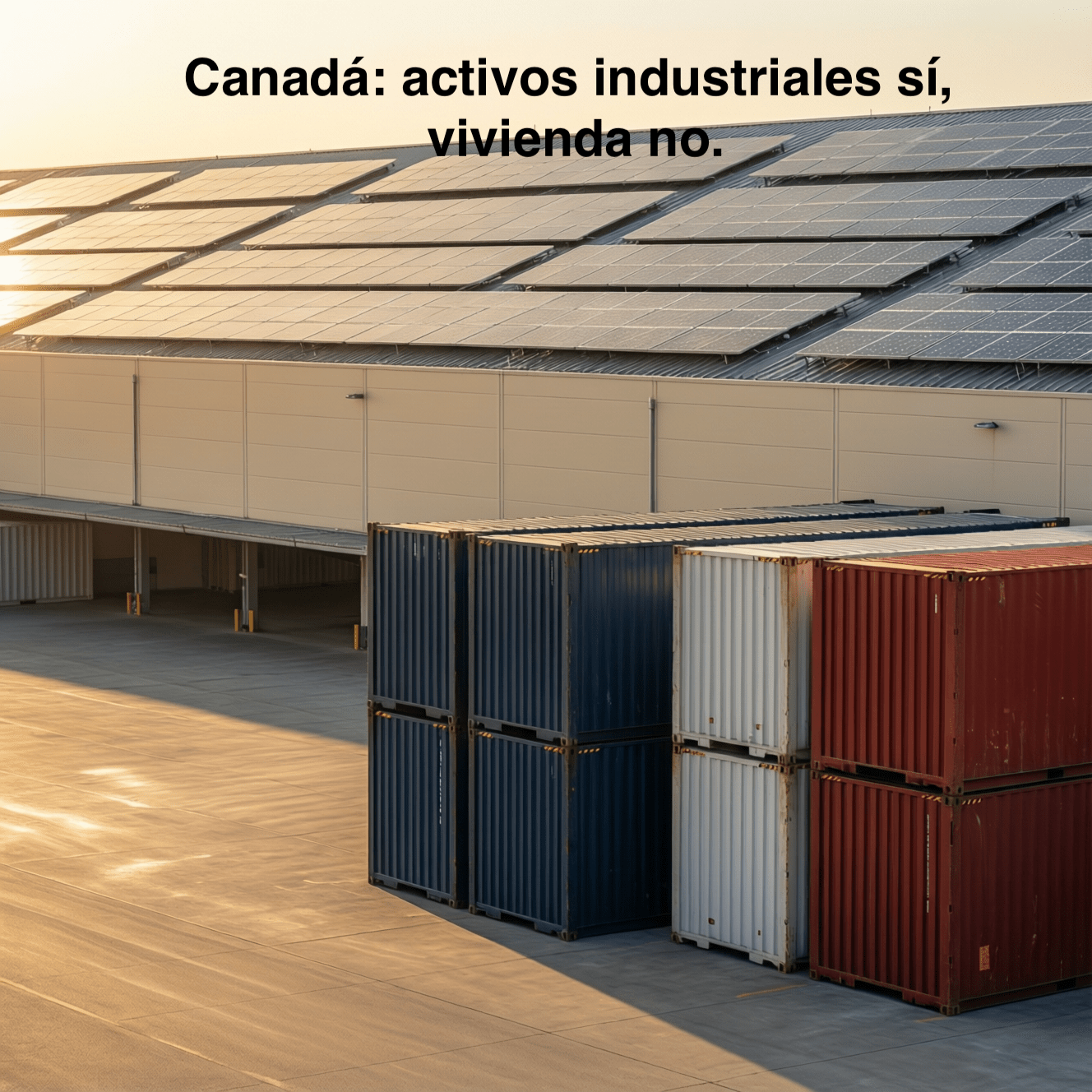
Canada: Industrial Assets Yes, Residential No
In 2025, Canada maintains its total prohibition on foreign residential property purchases (with few exceptions), extended until January 2027. However, it simultaneously strongly incentivizes investment in strategic industrial assets. The federal government and provinces offer grants, tax credits, and low-cost land for projects linked to the energy transition and technological sovereignty.
For qualified investors, this regulatory divergence creates a unique opportunity: access to a stable market (AAA rating) with structural demand guaranteed by government and corporate contracts, avoiding residential sector volatility.
Updated Legal Framework 2026
According to the Prohibition on the Purchase of Residential Property by Non-Canadians Act (S.C. 2022, c. 30), the residential ban is prorogued until 2027. Additionally, the government reinforced the Strategic Innovation Fund 2.0 in 2025 to attract industrial capital to critical sectors.
On the other hand, provinces operate under autonomous frameworks (e.g., Ontario’s Critical Minerals Strategy, Alberta’s Hydrogen Roadmap) requiring local corporate structuring (Canadian corporation or ULC) to access tax benefits. At Alquilujo Internacional, we facilitate this structuring through specialized local partners.
Opportunities by Province with Verifiable Incentives
Alberta: Green Hydrogen and Carbon Capture
Alberta leads the energy transition with 30 % CAPEX grants via the Technology Innovation and Emissions Reduction Fund. Projects access renewable energy at fixed rates for 15 years, ensuring predictable operating costs.
Structural demand comes from government and corporate contracts linked to industrial decarbonization. If you are interested in this sector, explore our guide on green hydrogen investment and energy assets.
Ontario: Semiconductors and Electric Batteries
Ontario allocates industrial land in the Advanced Manufacturing Park (Windsor) with 15-year municipal tax exemptions. Investors also access additional R&D tax credits.
Demand is driven by long-term contracts with automotive OEMs and chip manufacturers. To better understand this asset, consult our analysis on productive assets in semiconductors and their profitability.
British Columbia: Asia-Pacific Logistics
British Columbia offers logistics platforms at the Port of Vancouver with priority access to renewable energy (BC Hydro). Returns are supported by 10–20 year export contracts with Asian companies, maintaining stable net profitability between 6 % and 8 %.
Tax Benefits and Structuring
Investment requires establishing a local Canadian corporation. We recommend working with specialized partners to comply with federal and provincial regulations. Key benefits include:
- Grants of up to 30 % of construction costs (through programs like Strategic Innovation Fund).
- Municipal tax exemptions for 10–15 years.
- Prioritized access to renewable energy at fixed rates, protecting operating margins.
Conclusion: Real Yield vs. Speculation
Industrial assets in Canada offer 6–8 % net returns with institutional tenants (governments, corporations). Unlike residential housing, they eliminate regulatory volatility and rely on verifiable structural demand. Country risk is low (S&P AAA rating).
According to Statistics Canada, foreign investment in industrial assets grew 42 % in 2024, while residential investment dropped to zero for non-residents.
Do you want to invest in Canada with an industrial and sustainable focus? Contact us and we will guide you to provinces and sectors with the highest incentives, ensuring robust legal structuring.