Spain housing prices 2026: supply shortage drives 4-6% increases
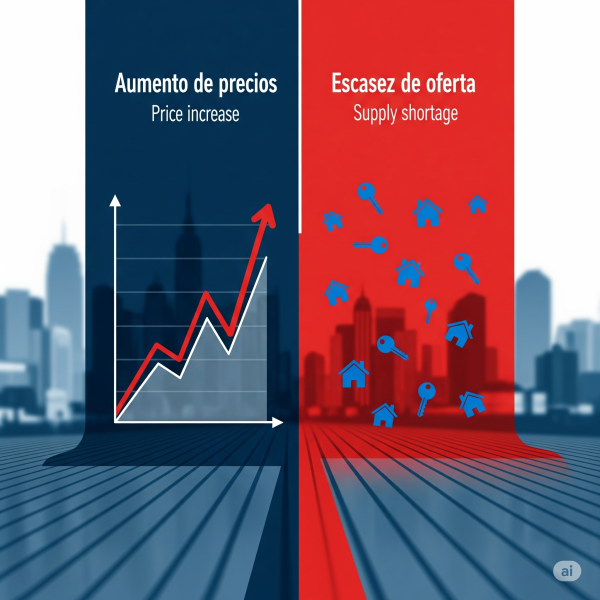
The Spanish real estate sector faces a new year of challenges in 2026, with housing prices rising and insufficient supply to meet strong demand. Renowned financial institutions like Bankinter and CaixaBank project increases of between 4% and 6% for 2026, an increment that could be even higher in high-pressure areas like Madrid, Barcelona, Málaga or Valencia.
For qualified investors, understanding this dynamic is essential to identify acquisition opportunities, structure operations with legal certainty and maximize profitability in a transforming market.
📉 The persistent supply shortage in the Spain real estate market 2026
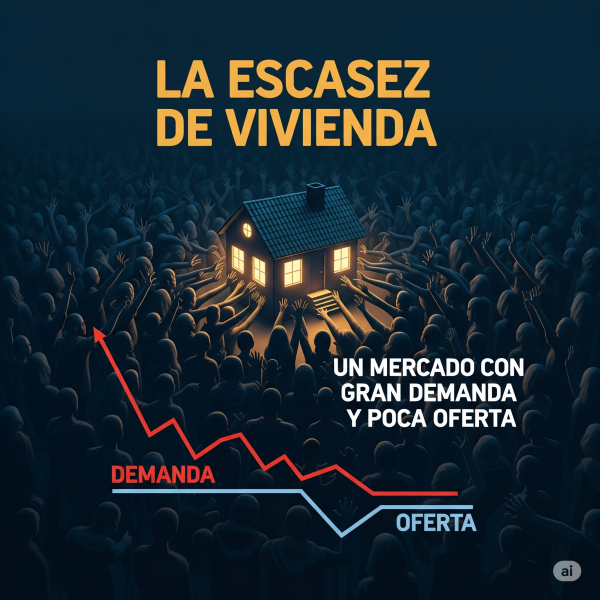
The main cause behind this trend is the persistent lack of supply, both in new construction and in the second-hand market. This imbalance intensifies because, while demand continues to be driven by population growth, increased disposable income and interest from foreign investment, construction and property sales fail to keep pace.
- Insufficient new construction: In 2026, ~150,000 new homes/year are needed, but only ~90,000 are delivered. The gap widens in tourist areas and major cities.
- Bureaucratic obstacles: Delays in licenses, lack of developable land and restrictive local regulations hinder the reaction capacity of the development sector.
- Elevated construction costs: Materials and labor remain above pre-pandemic levels, affecting the viability of new projects.
- Reduction of rental supply: The offer of long-term rental housing has contracted, pushing many to buy and raising sale prices.
🌍 Sustained demand: factors driving Spain housing prices 2026
While supply contracts, demand remains robust due to multiple factors:
- ✅ Population growth and new households: Spain adds ~200,000 new households/year, mainly in urban and coastal areas.
- ✅ International demand: Investors from EU, UK, USA and Asia seek assets in Spain for stability, climate and profitability.
- ✅ Interest rates normalizing: Although rates have risen, demand from qualified investors remains due to the search for tangible assets with verified returns.
- ✅ Remote work and mobility: Consolidation of remote work boosts demand in secondary cities and rural areas with connectivity.
- ✅ Quality tourism: Recovery of premium tourism sustains demand for assets in Costa Blanca, Costa del Sol, Balearic and Canary Islands.
🏙️ Areas with greatest price pressure in Spain housing prices 2026
Not all areas evolve equally. In 2026, stand out:
- 🔴 Madrid and metropolitan area: +5-7% projected. High residential and corporate demand, very limited supply.
- 🔴 Barcelona and Catalan coast: +4-6%. Sustained international demand, restrictive regulation on tourist rental.
- 🔴 Málaga, Marbella and Costa del Sol: +6-8%. Strong foreign demand, premium tourism and limited supply of quality assets.
- 🟡 Valencia and Alicante: +4-5%. Stable economic growth, prices still accessible compared to Madrid/Barcelona.
- 🟢 Secondary cities (Toledo, Ciudad Real, Zaragoza): +3-4%. Lower regulatory pressure, opportunities in productive assets and logistics.
💡 Strategies for qualified investors in Spain housing prices 2026
For institutional investors, family offices and qualified investors, this scenario is not a risk, but a strategic opportunity. The key lies in:
- ✅ Identify value assets: Seek properties in areas with high growth projection (logistics corridors, secondary cities) or properties that can be rehabilitated.
- ✅ Diversify into productive assets: Logistics, industrial and commercial offer net returns of 5-9% with less exposure to the Housing Law.
- ✅ Structure with legal certainty: Use independent corporate vehicles per asset for patrimonial protection and tax optimization.
- ✅ Exhaustive due diligence: Legally, technically and financially verify each asset before investing, especially in a market with information asymmetries.
- ✅ Explore stalled construction: Stopped projects with valid license offer revaluation opportunities of 30-40% after completion.
📊 Comparison: expected profitability by asset type in Spain 2026
| Asset Type | Net Profitability | Risk | Liquidity | Housing Law Exposure |
|---|---|---|---|---|
| Residential housing (stressed area) | 3-5% | Medium | High | High |
| Residential housing (non-stressed area) | 5-7% | Low | High | Low |
| Productive asset (logistics/industrial) | 5-9% | Low | Medium | None |
| Stalled residential construction | 8-12% (projected) | Medium-High | Low | Medium |
| Regulated tourism asset | 6-10% | Medium | Medium | Medium |
Note: Indicative profitability for qualified investors. Depends on location, management and legal structure. Consult personalized analysis.
💰 Conclusion: Spain housing prices 2026 demand professional strategy
In summary, the real estate market dynamics for 2026 is defined by a strong increase in housing prices, driven by a supply shortage that fails to curb high demand. For those looking to buy or invest, understanding these factors is key to navigating a constantly boiling market.
At Alquilujo International, we advise qualified investors on identifying opportunities, legal due diligence and structuring operations in the Spanish real estate market 2026.
Contact us to receive a personalized analysis of the Spanish real estate market in 2026, with strategies adapted to your investment profile: area analysis, financial modeling and corporate structuring for international investors.
Explore investment opportunities | Stalled construction | More market analysis
✅ Updated: April 21, 2026 – Market analysis with 2026 projections and strategies for qualified investors.